
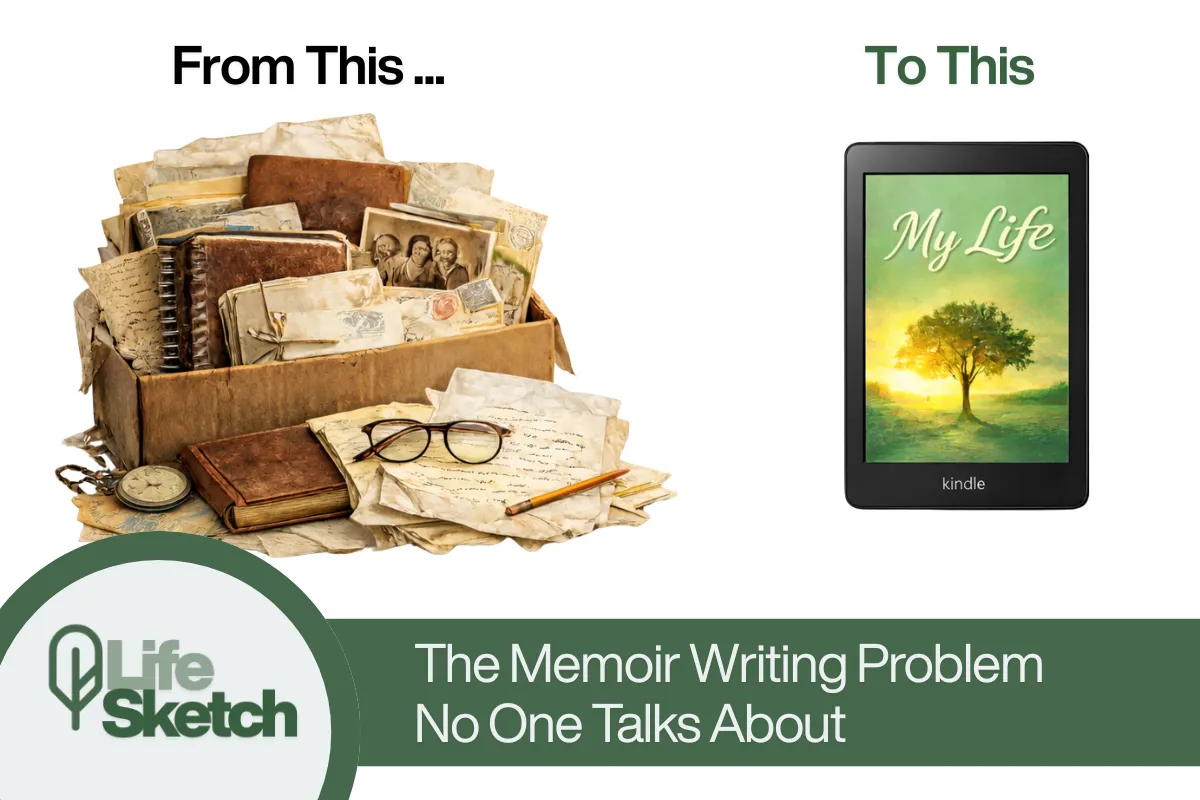
The Memoir Writing Problem No One Talks About
And Why Most “Life Story” Tools Quietly Fail Retirees
Most people don’t fail to write their memoir because they lack discipline.
They fail because the tools are wrong.
They’re asked to write when memory wants to talk.
They’re given prompts when stories want follow-ups.
They’re handed software when what they actually need is a listener.
That mismatch is why so many life-story projects stall, fragment, or quietly disappear into folders.
In 2026, the real question isn’t which memoir tool has more features.
It’s which one actually produces a page-turning life story—without requiring you to be a writer.
The Three Memoir Tool Categories (And Their Outcomes)
Let’s strip this down to outcomes, not hype.

Only Lifesketch reliably finishes the job.
Why Prompt-Based Memoirs Stall
StoryWorth works for a narrow group: people who enjoy writing, deadlines, and structure.
For everyone else, it introduces three silent killers:
missed weeks
shallow answers
disconnected stories
You don’t get a narrative.
You get a year’s worth of fragments bound together.
That’s not a memoir. That’s an archive.
Why Recording Alone Isn’t Enough
Remento improves things by letting you talk instead of type.
But recording alone creates a new problem:
lots of memories
no shape
Transcripts don’t become stories on their own.
They become raw material—and most people don’t know what to do next.
The Breakthrough: Conversation That Becomes a Book
LifeSketch is built on a simple, provable claim:
Conversation is how memory actually works.
LifeSketch doesn’t prompt and move on.
It listens, remembers context, and follows the story where it leads.
You speak naturally.
It asks the next right question.
It keeps threads connected.
That alone puts it in a different category.
LifeSketch Does What Other Tools Cannot
It turns conversation into narrative
Not transcripts. Not notes.
Readable, structured chapters.
It follows meaning, not checklists
Themes emerge. Moments resurface. Your life starts to look like a story instead of a timeline.
It works at your pace
No weekly guilt emails. No falling behind. Reflection isn’t scheduled—and LifeSketch doesn’t pretend it is.
It produces a manuscript, not a keepsake
A real memoir you can share as a polished PDF, EPUB or take forward toward publishing.
The Writing Coach: The Real Reason the Book Works
This is the part other tools don’t have—and can’t bolt on later.
LifeSketch includes a built-in Writing Coach that analyzes:
scenes
chapters
overall story flow
It flags where:
scenes feel flat
momentum drops
clarity breaks
emotional beats need sharpening
This is what professional editors look for.
The difference?
You don’t need to learn writing theory.
The coach translates craft into plain, usable guidance.
This is why LifeSketch doesn’t just collect stories.
It finishes them.
How Retirees Actually Write Their Best Stories
Not at desks.
Not on schedules.
They remember:
mid-conversation
while driving
while telling a story they didn’t plan to tell
LifeSketch meets memory where it naturally happens.
You talk.
It listens.
It shapes.
That’s why people finish.
Who LifeSketch Is Built For
LifeSketch is for you if:
you don’t think of yourself as a writer
you’d rather speak than type
you want your story to read well, not just exist
you don’t want to leave something unfinished
It is not for people who:
love rigid weekly prompts
want a scrapbook
only want raw transcripts
The Bottom Line
Many tools help you record memories.
LifeSketch helps you turn a lifetime into a readable, compelling memoir—with structure, guidance, and care.
You bring the life.
LifeSketch turns it into a book worth reading.
That’s not a feature.
That’s the whole point.